Is a Standing Desk Right for You? What To Think About
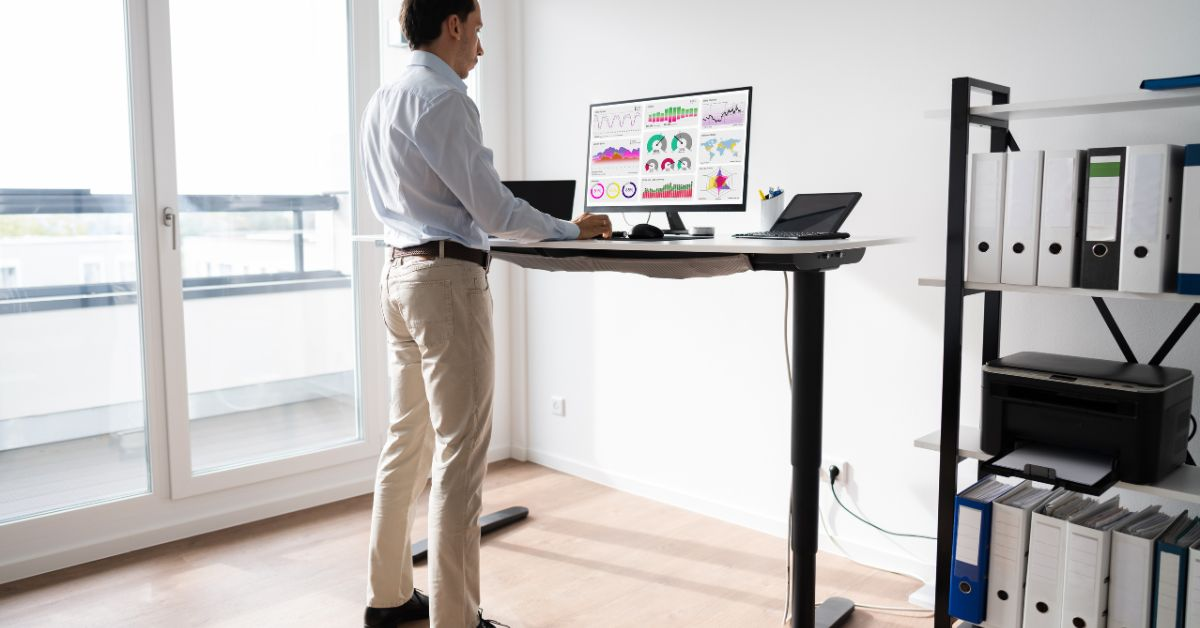
You’ve probably seen standing desks gaining popularity in modern offices and home setups. They promise health benefits and increased productivity, but are they the right choice for everyone? Before you switch to a standing desk, you should consider several factors to determine if it fits your work style and health needs. Is a standing desk right for you? Here’s a look at what to think about.
Evaluating the Health Benefits
Many people choose standing desks for their potential health advantages. Research suggests that sitting for prolonged periods contributes to various health issues, including back pain and poor posture. A standing desk encourages you to change positions throughout the day, which alleviates some of this strain.
However, standing all day isn’t the perfect solution either. It can lead to foot, leg, and lower back discomfort if you don’t take breaks. The key here is movement. An adjustable standing desk allows you to alternate between sitting and standing, which promotes a much healthier balance.
Considering Your Workflow
Your daily tasks and workflow play a significant role in whether a standing desk is a practical option for you. Consider the nature of your work:
- Do you spend long hours in deep focus on a single task?
- Are you frequently on video calls?
- Does your job involve a lot of typing or precise mouse movements?
Some people find that standing helps them stay alert and engaged, especially during shorter tasks or collaborative meetings. Others might find it distracting when they need to concentrate deeply. If you want to optimize a small office with a corner desk, an L-shaped standing desk could provide the extra surface area you need while still offering sit-stand flexibility.
Maximizing Your Desk Setup
To get the most out of a standing desk, you need the right setup. Simply standing at a tall desk is just not enough. Proper ergonomics are pivotal to avoid creating new physical problems. Your monitor should be at eye level, and your keyboard and mouse should be positioned so that your elbows are at a 90 degree angle.
You can elevate your workspace with a monitor stand to make sure your screen is at the correct height, whether you are sitting or standing. Anti-fatigue mats can also make a considerable difference by providing cushioning and reducing strain on your feet and legs during standing periods.
A standing desk is a valuable addition to your office, offering health benefits and a dynamic way to work. By weighing the health implications, analyzing your workflow, and committing to an ergonomic setup, you can decide if a standing desk is right for you and your needs. The goal is to create a comfortable and productive environment that supports your well-being throughout the workday.